Why Hospitality?

Biblical hospitality has become a lost art and a lost value.
So much of what we know to be hospitality has become industrialized and commercialized through restaurants, hotels, and Williams-Sonoma. The way they paint hospitality leads consumers to believe that you have to pay enormous sums of money to experience hospitality — eat at the best restaurants and stay at the fanciest hotels. And often you do. Hospitality has become an industry — a way to make money, a commodity to be traded, rather than a value to be practiced. In this industrialization of hospitality, it has become an industry known for its inhospitable treatment of its own workers. Long hours, low pay, chew you up and spit you out.
The Church doesn’t have much better of a track record. Those of us who call ourselves Christians have lost the value of hospitality. We rarely do much more than extend pithy sentimentality to those in need of love, show kindness to one another, or invite people into our homes. True hospitality rarely exists in the culture around us.
Perhaps this is because we have forgotten the true meaning and power of hospitality. Our English Bibles don’t capture the full meaning of the Greek word for hospitality, philoxenia. Philoxenia comes from two words: philia and xenia. Philia means “brotherly love” and xenia means “stranger” or “alien.” These two words combine to carry the meaning, “loving a stranger so they become family.” The love expressed in hospitality has both a direction and a purpose. It is directed toward strangers with the purpose of making them family. In other words, hospitality is a familial love that we extend to strangers. This is a powerful love that can be embodied well outside the nicest restaurants or the fanciest of hotels.
Hospitality is intentional.
There are two strong barriers in American culture against this idea. The first barrier is our idealism that we bring into our relationships. This idealism is a self-centered, meet-my-needs approach to relationships that have no room for the normative patterns of disagreement, conflict, and reconciliation that lead to deeper relationships. Instead of creating a family, idealism leads to “cancel culture,” in which we “cancel,” “unfriend,” or “unfollow” others because their opinions differ from our own, rather than being curious to understand their points of view. The other barrier is intimidation. Intimidation is preemptively cancelling ourselves. It is the if-they-really-knew-me-they-would-not-like-me syndrome. This is a barrier that we manufacture to prevent ourselves from feeling unloved, unfriended, and cancelled. This lie goes to the core of who we are: “Are you really made in the image of God?” Both of these barriers contribute to the radical individualism we now face in American society.
Hospitality challenges this individualism, because its purpose is to create a spiritual family. For those of us who call ourselves Christians, our second greatest commandment is to love one another (Mt. 22:39). Modeled after Jesus, this love is voluntary, sacrificial, and intentional. And while this definition of hospitality can include the popular definition — pertaining to entertainment — it goes deeper than mere entertainment to create a new family. A family voluntarily, sacrificially, and intentionally spends time together when they are not entertained — perhaps especially when they are not entertained. The individuals of a family are co-partakers and co-providers of identity, nourishment, joy, grief, sorrow, empathy, protection, belonging, commitment, time, resources, honesty, forgiveness, grace, mercy, and love.
Hospitality is voluntary.
Even pastors struggle to show this type of hospitality. We can feel obliged to invite our parishioners into our homes, even when we do not want to. It is hard to make this a voluntary practice — usually we do not want our congregants to know too much about us. We feel the need to self-protect and therefore we do not extend this familial love to those around us. One pastor I worked for extended the verbal invitation to drop by, but clearly demonstrated that it was mere sentimentality and we should not just “drop by.” He did not want to voluntarily have a familial relationship with the church — for him it was a duty of his job.
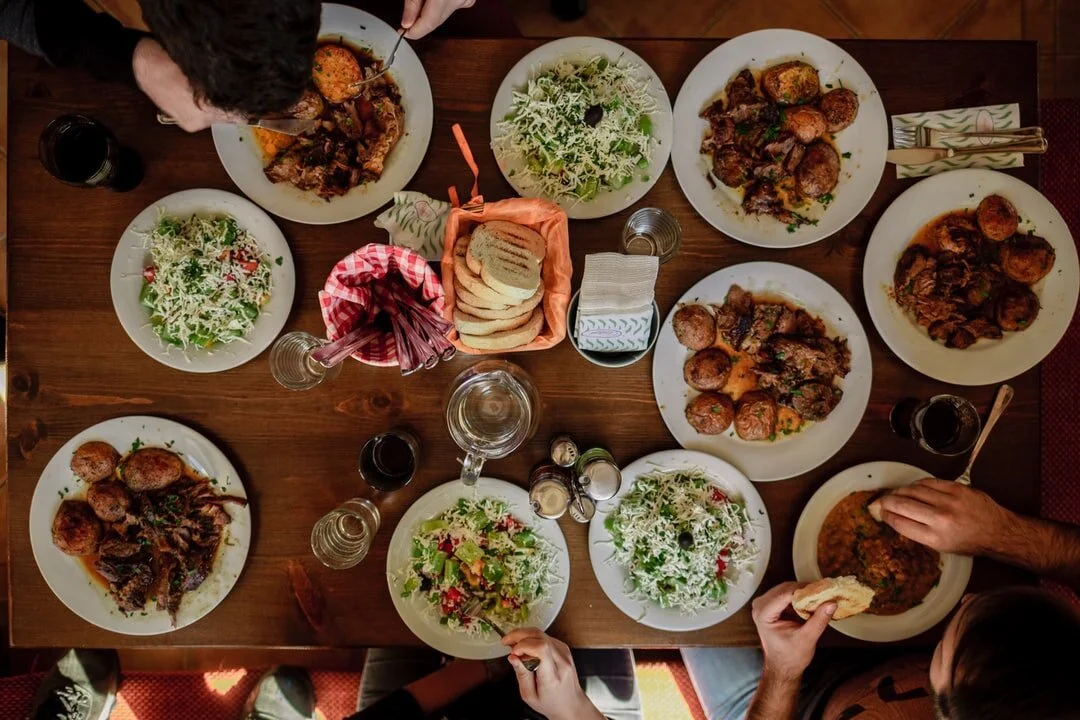
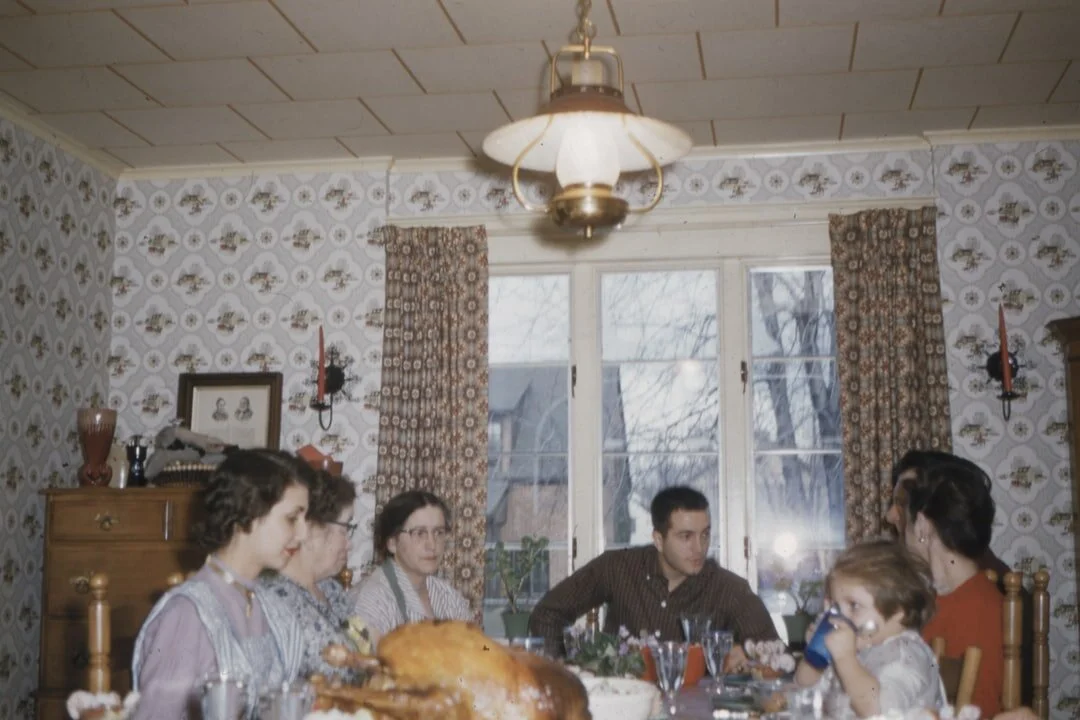
But hospitality cannot just be obligatory sentimentality. It takes intentionality and sacrifice in order to invoke its loving power. Stacey and I both worked in the hospitality industry and have that training under our belts, but we still have to be intentional to regularly invite people into our home. At first it can be an awkward dance between us, the hosts, and guests. They are new to our space. They do not want to intrude. They turn down our simple offer of water. But over time and visits, they grow more comfortable in our homes, they do not even ask for a glass of water. They know where the glasses are kept; they retrieve them on their own and get their own glass of water. They know these things because they have become family.
Hospitality takes sacrifice.
Toys are broken, glasses are broken, and occasionally something goes missing. Though thankfully rare, these are bound to happen. Much of the sacrifice is quantified in our time spent taking care of the other. Our culture tells us that time is our most precious resource. We should spend our time on ourselves, be efficient, and have our days scheduled down to the minute. This is anathema to hospitality. Setting up, purchasing food and drink, and cleaning up all take enormous amounts of time. Something is bound to go wrong and take more time than planned. And there is always the guest that shows up early. We have to build margin into our lives to show hospitality. Afterward, when we are already exhausted from a full day, there is still more work to do: clean up the dishes, drink ware, and trash to bring our home back into some semblance of order. Our kids are tired and need to be put to bed. And for some reason, the last three guests are here two hours past the end of the party. But they are here because they have become family.
Hospitality creates family.
From the beginning of creation, God has been in the business of creating family. When he saw Adam alone in the Garden of Eden, he immediately saw that it was not good for man to be alone and he created Eve (Gn. 2:18). When he called Abram, God covenanted with him that he would become a father and his descendants would outnumber the stars (Gn. 17). Large portions of Scripture are dedicated to the generations that formed the people of Israel. The New Testament writers are constantly trying to convince the early church that they are a new family in Christ, despite their ancestry being Jew or Gentile. And the final scene of Scripture is the wedding feast of the lamb—one final and eternal family is being formed (Rv. 21).
Hospitality creates family because it creates space for the other. God repeatedly makes space for us in his Kingdom. He created space for Isaiah in his throne room and cleansed his lips when Isaiah confessed his uncleanness. Jesus created space for the woman at the well (Jn. 4), the woman who washed Jesus’ feet (Lk. 7), and all the disciples, including Judas, at the Last Supper (Mt. 26). Against the Pharisees, Jesus understood his holiness was contagious, rather than the sinfulness of whomever he was interacting and, therefore, made space for them in his family. The Spirit creates his home within us and we, in turn, are invited into the life of God. This is what St. Paul writes about in Romans 5:8, “But God shows his love for us in this, while we were still sinners, Christ died for us.” When God created space for us, it took intentionality and sacrifice.
At The Table Project, we want to restore hospitality as a posture and practice of the Church.
In today’s cultural milieu, we see an ever widening gap between people with differing opinions—we want to reverse that. As the Church, we want to reclaim and restore the centrality of hospitality; in our worship, in our work, and in our homes. We hope to inspire you to gather around the table—to feast and to sup with those whom they don’t know. We hope to see new families formed, neighborhoods strengthened, the sacred bonds of relationship renewed. We hope to share stories of voluntary, intentional, and loving sacrifice extended to strangers—maybe you have a story to share.
Because Jesus has extended the invitation of hospitality to us, we must be willing to extend that invitation to others.